Meet the Superclubs, pt. 1 - 1/22/26
Chelsea take on Arsenal (Sat 7:30am EST, ESPN+/Youtube) in the London derby of superclubs, with both sides desperate for a win to remain in the hunt for the title

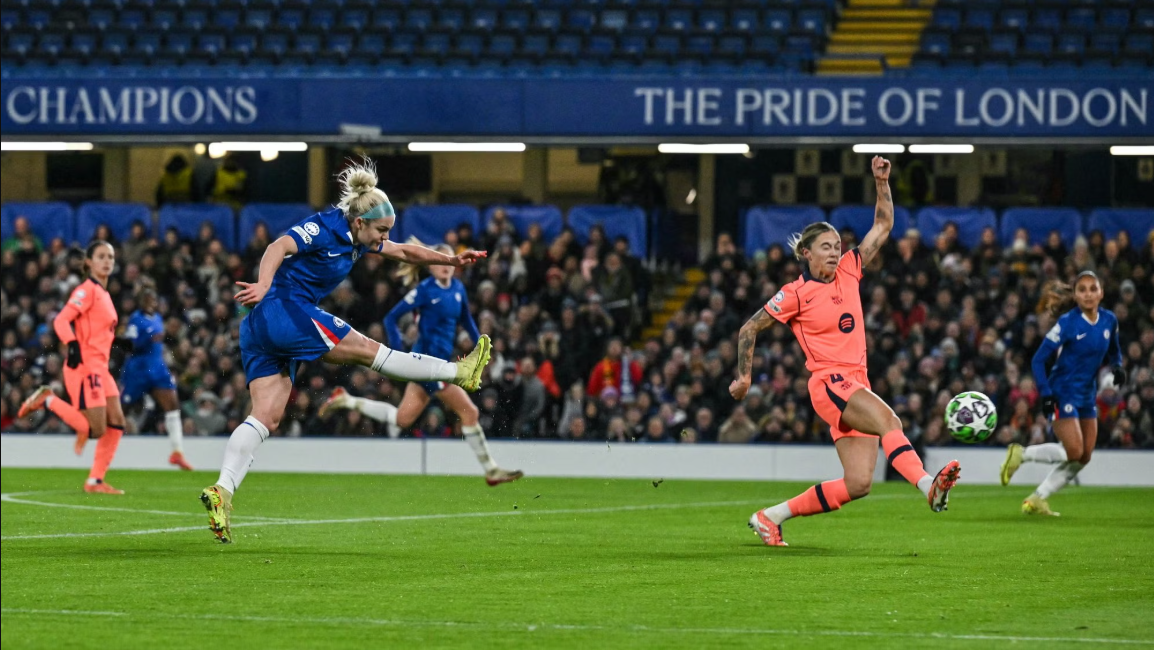
Last week we discussed the core structure of European women's football at the league level, today we're focusing on the biggest clubs. The most notable match of the week by far is the London derby of Chelsea, defending WSL champions, taking on Arsenal, defending European champions, so let's talk "superclubs."
But what is a superclub? Because of the lack of salary cap in most leagues, there are a few teams that are consistently at the top in European football, so talking about superclubs is essential to understanding global club football, men's or women's.
There are a few different potential definitions that I personally tend to use – and I don't want to make too rigid of a definition – so here are my guidelines. The simplest one is trophies – if a team can compete for both the Champions League and its domestic league, it's almost certainly a superclub. Another is money – the Deloitte money league came out this past week, and Chelsea and Arsenal were at the top of revenue across most of the world (US clubs were not included).
But I think the most important criteria that I use is this: does the club regularly have at least half of its teamsheet filled by world-class players? Chelsea, for example, have five world-class players it can play at striker alone: Sam Kerr, the Australian legend; Mayhra Ramirez, the Colombian battering ram who was one of the World Cup 2023's breakouts; Aggie Beever-Jones, a young Englishwoman who seems to score every match; Catarina Macario, who can play any forward position including striker; and Alyssa Thompson, who usually plays wing but can certainly lead the line if needed. And that's just one position!
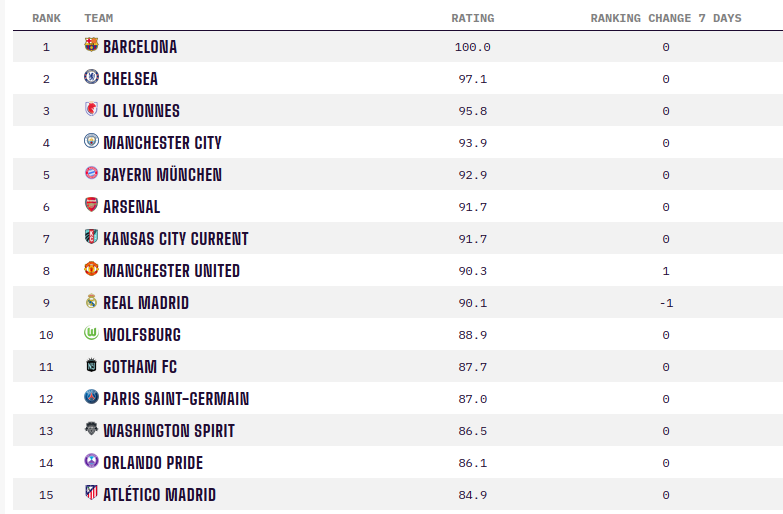
By these standards, I had a personal list of 13 clubs (ten in Europe, three in the USA), and then I discovered another criteria: I checked Opta's power rankings and the 13 I'd picked out were the top 13 there. Convenient! Let's go through the lot and you can build your Champions League rooting interests.
THE SUPERDUPERCLUBS
The top three clubs on the Opta list, Barcelona, Chelsea, and Lyon, are in a class above the rest in that not only do they have world-class players in their regular starting lineups, but just about every player they bring off the bench is also a global star. They're also super in trophies; Barcelona and Lyon have won all but one Champions League in the last decade, while Chelsea have had to content themselves with merely winning 9 of the last 11 WSL titles.
BARCELONA: The most dominant club in the world, Barcelona have made the last five Champions League finals, winning three. And generally when they win, they look like the best side in the world, controlling the match with short passes, high press, and constant possession.
Barca is built on a midfield backbone of Alexia Putellas, Aitana Bonmati, and Patri Guijarro. The former two are creative goal-scorers who've won the last four Ballon d'Ors between them, while Patri is a deep-lying playmaker and defensive midfielder who keeps the team together. The forward line stars superb goalscorer Ewa Pajor and wingers Salma Paraluello, Claudia Pina, and Caroline Graham Hansen, while the defense is anchored by veterans Irene Paredes and Mapi Leon.
Barca's women's dominance may be under some threat from its men's team's financial issues, however. In order to try to desperately lower costs to comply with La Liga rules for the men's team, women's players like Fridolina Rolfo and Christine Engen were allowed to leave for free last season. They're great enough to survive some cuts, but the dominance seems increasingly fragile.
LYON: In terms of sheer number of world-class players, as well as number of trophies, Lyon is the greatest club in women's football. Barcelona may have a philosophy with players built specifically around that, which has given them the recent advantage, but it's a very close competition.
Back in the 2000s, as Lyon was the biggest club in men's football in France, the owner decided to invest heavily in women's football, turning it into the center of the rapidly professionalizing European club game, a feat recognized in 2019 when it hosted the finals of the Women's World Cup. They have won every domestic title save one since 2007, and won seven Champions Leagues in a row in the 2010s.
Lyon is an all-star team every time they play, with legends like Wenie Renard (France), Christiane Endler (Chile), and Ada Hegerberg (Norway), French stars Salma Bacha, Marie-Antionette Katoto, Kadidiatou Diani, Americans Lindsey Heaps, Lily Yohannes, and Korbin Schrader (nee Alpert), and young stars Melchie Dumorney (Haiti), Tarciane (Brazil), and Alice Sombath (France). To name just a few!
(As a side note, Lyon has had a few different brandings over the years: Olympique Lyon, or OL; Lyonnais; currently OL Lyonnes; or just "Lyon." To make matters extra confusing, for a few years they co-branded with the NWSL's Seattle team, making them OL Reign; happily they're the Seattle Reign again. Puns are important!)
CHELSEA: In terms of superstar players and domestic champions, Chelsea, who've won 9 of the last 11 WSL titles, match with the previous two clubs here. But Chelsea have yet to break through and win a Champions League (even as London rivals Arsenal have won two), a matter of some consternation for the Blues, being beaten by Barcelona in the semis two years in a row.
I mentioned Chelsea's astonishing forward depth above, but that runs throughout the entire team. Several of England's Lionesses play for the club, including young goalkeeper Hannah Hampton (who is blind in one eye, astonishingly), former captain Millie Bright, marauding defender Lucy Bronze, genius creative attacker Lauren James, and midfield maestro Keira Walsh.
The superbly named French winger Sandy Baltimore has made a home at Chelsea, and imperious American defender Naomi Girma is also at the club, although she's been injured a bit too much to make an impact. They also have Scot Erin Cuthbert as their midfield engine, and Australian Ellie Carpenter gives them a second world-class right-back alongside Bronze, just for fun.
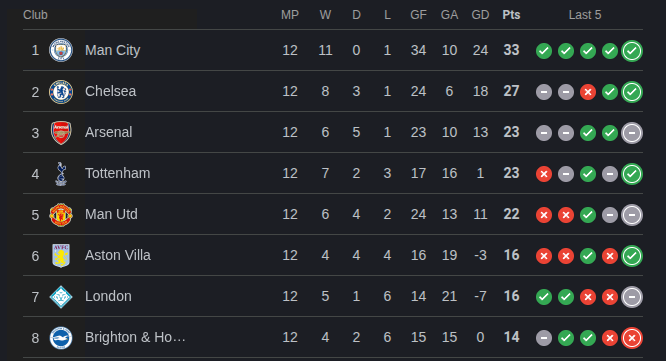
Despite their quality, Chelsea are facing one of their toughest title challenges yet, thanks primarily to the increasing strength of the rest of WSL field.
THE ENGLISH SUPERCLUBS
If any clubs are likely to break into the absolute top tier, it's one of the three big English clubs, Manchester City, Arsenal, and Manchester United. As the Deloitte money league shows, the WSL is, similar to the English Premier League, starting to leave the other leagues in Europe behind.
MANCHESTER CITY: City probably would have a decent shot at being included as a superduper club above if they hadn't had a disastrous, injury-laden season last year where they changed managers and failed to even make the Champions League. The reward though, a less congested fixture list and, as of this writing, a six-point lead at the top of the table.
City has some of the very best names in world football, including Bunny Shaw, the powerful, skilled Jamaican striker who's led the league in scoring the last two seasons, as well as Yui Hasegawa, the Japanese playmaker with one of the best passing touches in the world, and Dutch forward Vivienne Miedema, arguably the greatest WSL player of her generation.
They've also got a strong set of English players like defender Alex Greenwood, midfielder Grace Clinton, and attacker Lauren Hemp. City also seems to like NWSL stars, with former MVP Kerolin on the roster as well as new signing from Portland, Sam Coffey.
ARSENAL: The defending European champions are maybe my favorite club to watch in Europe, thanks to a combination of physical defending, aggressive and creative attacking, and occasionally disastrous mistakes. Arsenal are both the current European Cup holders and the last non-Chelsea winners of the WSL…but those are their only two major trophies in the last decade.
The Gunners' biggest stars are many of their English players. Captain Leah Williamson, who had one of the greatest matches by a defender I've ever seen in the Champions League final to defeat Barcelona, anchors the back line. Alessia Russo, the striker who scored my favorite goal in women's football, leads the front. Arsenal also employ both of England's supersub heroes from Euro 2025, big game star winger Chloe Kelly and bouncy youngster Michelle Agyemang (injured for the season, sadly.)
International stars for Arsenal include American stalwart right back Emily Fox, speedy Canadian teen Olivia Smith, and Aussies Steph Catley, Caitlin Foord, and Kyra Cooney-Cross. Most important, perhaps, is Spanish attacker Mariona Caldentey, who transferred from Barcelona last season and beat her old club in the Champions League final, while challenging for best-player-in-the-world status.
MANCHESTER UNITED: As a lifelong hater of Manchester United's men's team, I'm shocked by how much I enjoy watching the women's side. Lack of Alex Ferguson helps a lot, I suppose. At any rate, United is one of the youngest and fastest-growing of the superclubs. Their women's side were shut down in the mid-2000s, rebuilt in the late 2010s, and are now one of the biggest in England, with an FA Cup title last year and their first Champions League this year.
Manchester United's relative youth means that they don't quite have the superstar depth of the other clubs here. Arguably their two biggest stars, versatile Swede Fridolina Rolfo and German striker Lea Schuller, were signed in the last six months. They also have the Golden Boot winner from the 2023 WWC, Hinata Miyazawa, who's playing a deeper, more creative role for her club.
Their defense is anchored by young English star Maya le Tissier (daughter of one of the most interesting men's players of his generation) and Dutch veteran Dominique Janssen, with American goalkeeper Phallon Tullis-Joyce backing them up. England star Ella Toone and all-around Swedish midfielder Julia Zigiotti Olme hold down the center, while mercurial French forward Melvine Malard leads the attack.
These are the six most stable superclubs in Europe. Next week we'll take a look at the less stable ones in Europe, as well as what makes for a superclub in the NWSL (and maybe Mexico): Bayern Munich, VfL Wolfsburg, Paris Saint-Germain, and Real Madrid; plus Kansas City, Washington, and Gotham, and whether Orlando counts.
MATCH OF THE WEEK
This is an easy one, as mentioned. Chelsea take on Arsenal (Sat 7:30am EST, ESPN+/Youtube) in the London derby of superclubs, with both sides desperate for a win to remain in the hunt for the title, and in Arsenal's case, keep close to a Champions League place. Look for both sides to put out what they think are their best teams, which in Chelsea's case, includes a two-right back system where Ellie Carpenter bombs up the touchline while Lucy Bronze moves into the middle of the pitch. Whoever Arsenal plays on their left wing, whether it be Caitlin Foord, Chloe Kelly, or perhaps Olivia Smith, will have a lot to do to keep from being overrun.
With several other leagues playing their cup matches (somewhat out of scope for this column, as they don't appear to be watchable in the States), the WSL's return after their week of cup matches are the best on offer. League leaders Manchester City are playing London City Lionesses (Sun 6:55am EST, ESPN+/Youtube). London City themselves are a fascinating experiment in women's sports and one I'll write about soon. The other key match sees Aston Villa against Manchester United at the same time.
As a side note on the WSL – if you're watching live, you need the ESPN+ account that requires a subscription, but the WSL's Youtube account makes the matches available on tape delay.
Also, it's not an official FIFA international break, but the US Women's National Team does have two friendlies scheduled against Paraguay (Sat 5:30pm EST, TNT/HBO Max) and Claudia Rodriguez (see below) and Chile (Tues 10pm EST, TNT/HBO Max).
(There are also German matches and one Spanish match on DAZN, as well as Italian Cup matches; and Mexican matches on Vix/Youtube this week as well, but none of them jump out as being must-watches.)
LAST WEEK'S BIG RESULTS
My suggestion for match of the week, Lyon-Paris FC, lived up to my recommendation in some respect, as Paris took points off of Lyon with a 0-0 draw, the first time this season Lyon didn't win in France. The match was entertaining, with both sides having big chances, but did need some goals.
Inter beat Juventus in the first Italian club match I've seen, putting them in the driver's seat for second in Serie A. The Liga MX Feminil played two matches, with the most interesting result being W Champion's Cup semifinalists Pachuca missing their chance to go top by losing to Cruz Azul.
IN OTHER NEWS
The NWSL continues to get wins and losses with each transfer cycle. The win? Paraguayan teenager Claudia Rodriguez, who was largely the only reason to watch the women's Copa America before the incredible final, signing with the Washington Spirit. Rodriguez may need time to acclimate to the pace of the NWSL and bulk up some, but she has the goods to be a world-class goalscorer.
On the other side, San Diego's French winger, Delphine Cascarino, left for London City Lionesses on a free transfer. She apparently wanted to be closer to her family, and she did help them win the major payday of the World's Sevens tournament, but man, she was my favorite player to watch in the league. The Wave did replace some of Cascarino's flair and skill with buying Brazilian striker Ludmila from Chicago (another of my favorite NWSL players).
In non-transfer news, Chelsea and Manchester United won their League Cup semifinals to set up a date for England's first notable trophy. In the elder cup, all the major WSL clubs won their FA Cup matches, with Arsenal beating Aston Villa 2-0 in the big WSL-on-WSL match.
GOAL OF THE WEEK
Honestly this was a bit of a dismal week for actual goals at least for my\e. Though there were plenty of competitive matches, the finishes themselves from the eight or so matches I watched were pretty basic. That is, until the last match I saw, Monterrey against Cruz Azul, where Spanish star Lucia Garcia picked up the ball after a sudden turnover and chipped the goalkeeper from just under halfway. This gave Monterrey a 1-0 lead in a match they'd win 2-1.
You gotta love a goal where you can see the goalkeeper realize just how screwed they are in real time.